
Interviews
Laura Stevenson Interview
Laura Stevenson talks to Real Sounds about ambiguity, arrangement, music therapy, and the individual connections songs can make.
29 Aug 2026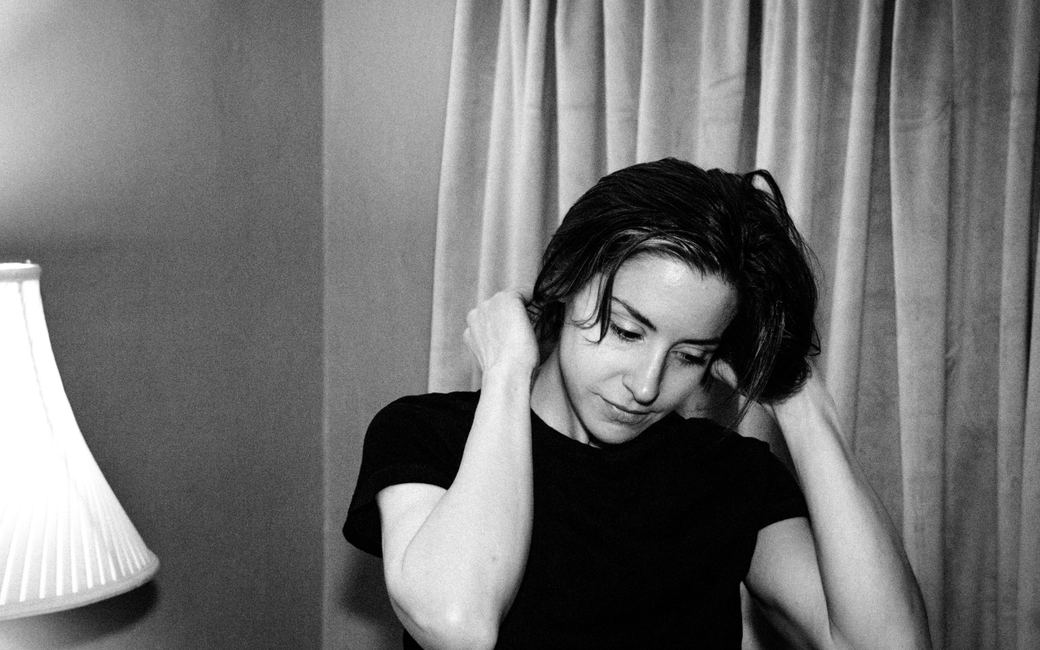
Laura Stevenson speaks to Real Sounds about ambiguity, arrangement, music therapy, and the individual connections songs can make.
Photo: Rachel Brennecke.
Your catalogue includes records that have been revisited, remastered, and returned to by listeners over time. What do you notice when an older song begins to have a life beyond the one you imagined for it?
It's funny- I imagine nothing for these songs as I create them and record them - I think that would completely step on any of the honesty that songwriters are always reaching for. For me, the songs happen and then they kind of linger in the air around me while they mirror my experience at that time, and then they sort of fall into this timeline and just sit there like a memory you remember less and less of, so it's strange when people can kind of enter into that memory and combine it with the details of their own lives. It's definitely beautiful but really, really strange.
In previous interviews you have said that you prefer to draw the outline of a story rather than spell out every detail. What can ambiguity do in a song that literal writing cannot?
Ambiguity is a great way of dealing with processing painful or shameful feelings, events, etc. - for me, I can work through whatever I want to work through at my own pace, writing in code, using metaphors, being indirect can be a great way of staying safe. Then you can become more literal as you learn to tolerate more or can feel like you have the tools to face things head-on. For listeners, it's kind of an invitation to participate. If you leave something open, and the words aren't so direct- there are more possibilities for connection.
On Late Great, you recorded with a full band and then built out the tracks at home with extra guitars, bass, percussion, and synths. When does layering become a way of clarifying a feeling, rather than obscuring it?
I love layering and thank goodness I figured out how to do it from home with more than just my voice because now there are so many more options and colors I can play with. It's always been about making a little world and trying to paint the picture of what I see in my head but I never really fully get there. I'm a little closer now but yeah, it's definitely about representing exactly what the feeling is because words and music by themselves aren't enough.
You have a distinctive ability to make an arrangement feel both carefully constructed and slightly unruly. Which part of the process do you enjoy most: the first spark of a song, the problem-solving of arrangement, or the moment it becomes a recording?
It will always be the spark of the song - that's always the most important for me and it's a rare and special feeling that I really like to get lost in. And then when you're done you're like, "well, that'll never happen again." And then it does and you're like "oh thank god."
You have described humour as something that sits alongside vulnerability in both your writing and your stage presence. What does a joke allow you to say that straightforward sincerity does not?
Oh I definitely hide behind jokes, that's the fear of intimacy or the inferiority complex or the imposter syndrome or whatever you want to call it. But I also love to laugh and spend most of my time doing it because it's fun. When I am playing in front of people, I have to shut all of that off and go somewhere else that is, for me, extremely private, and people are seeing me connect with the music and hearing me sing and singing is, in my mind, the most intimate thing you can do. It took a really long time for me to learn how to sing without tears streaming down my face. I just feel totally cracked open and exposed. So when the music stops, I'm like "just kidding, folks!" but that's the only way it's possible for me to be able to go to that place.
Your music-therapy work has made improvisation feel less intimidating and listening more central. Has that changed the way you work with other musicians in the studio?
You have said that the most meaningful part of releasing music can be the small, individual connections it makes. Is there a particular kind of listener response that stays with you?
For the first part of your question - yeah I think it definitely has made me more confident in the studio and better at communicating what I want. I can articulate ideas better - all the music theory helped me in that department because now I have some official language to use so I can direct musicians more efficiently which is cool. In terms of individual connections with people from the music - that has always been my favorite part of this whole thing. The responses that stay with me are the ones that make me feel like I'm helping someone in any sort of way. That makes me feel useful.
You have been writing and releasing records for well over a decade. When you look back at the Laura Stevenson catalogue, do you hear a thread that you did not recognise at the time?
There are so many songs about feeling like I'll never understand why I was alive or why anything was anything ... and there was a desire to turn that into something beautiful but I was just really depressed so it just made me feel really lost.
Outside music, what has recently made you feel curious, delighted, or creatively recharged?
I have a little vegetable and herb garden that I have been keeping alive which is good, and I like to learn how to cook and bake things. With the nature of my work and parenting a small child - I am around people all the time and I am giving them a lot of my energy, which I love, but at the same time, I'm very introverted so any time that I can use my hands and make something in complete solitude - I am thoroughly delighted.
Is there an artist working today whose work you particularly admire? What is it about their approach that resonates with you?
Dianna Settles, she's a painter and muralist who lives in Kentucky and I've known her for a really long time through music. Her work is so honest and confrontational and beautiful and vulnerable and I think she's absolutely brilliant.